Biopsy: Ithaca College
The unbelievable disaster continues…

I know more than I wish to confess about Ithaca College and could (but won’t) write a lot about it. But here’s a wee insight that may prove relevant to New College.
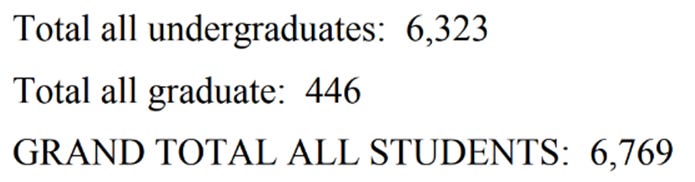
The starting point of any Ithaca convo is the collapse of student enrollment:
2015
2024
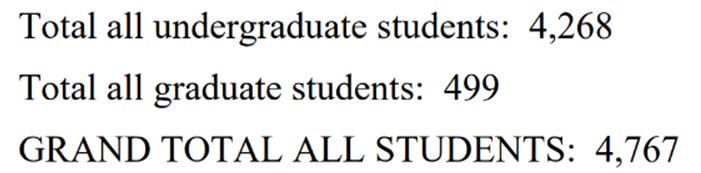
That’s a 33% decline in undergraduate enrollment, or probably somewhere around $100M in lost revenue. According to their last 990 (2023), they’re running about a 10% total margin, which, according to Fitch, is about the lowest a college can go before being considered financially unhealthy. The college isn’t in grave financial danger, but it is far from where it was a decade ago.
And if you looked at their marketing over the last decade, the reasons for the collapse become somewhat obvious. But apparently, the beginning of the end was 2008.
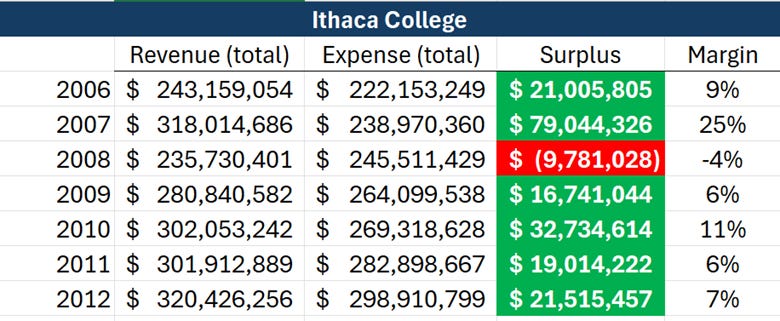
The story I’ve been told is that in 2008, the college’s revenue tanked. So, obviously the appropriate response is to admit everyone the following year (admissions standards can be immediately readjusted and the brand won’t be damaged). Then, too many students matriculated for 2009, so the college had to offer subsidies to upperclassmen so they’d move off-campus and deferral compensation to freshmen so they’d delay a year.
The plan was to then revert the admissions standards back to pre-2008 levels. But that proved impossible, so the college has been slumming its way to uncompetitive finishing school ever since.
First, a bit if dissection on the above financials:
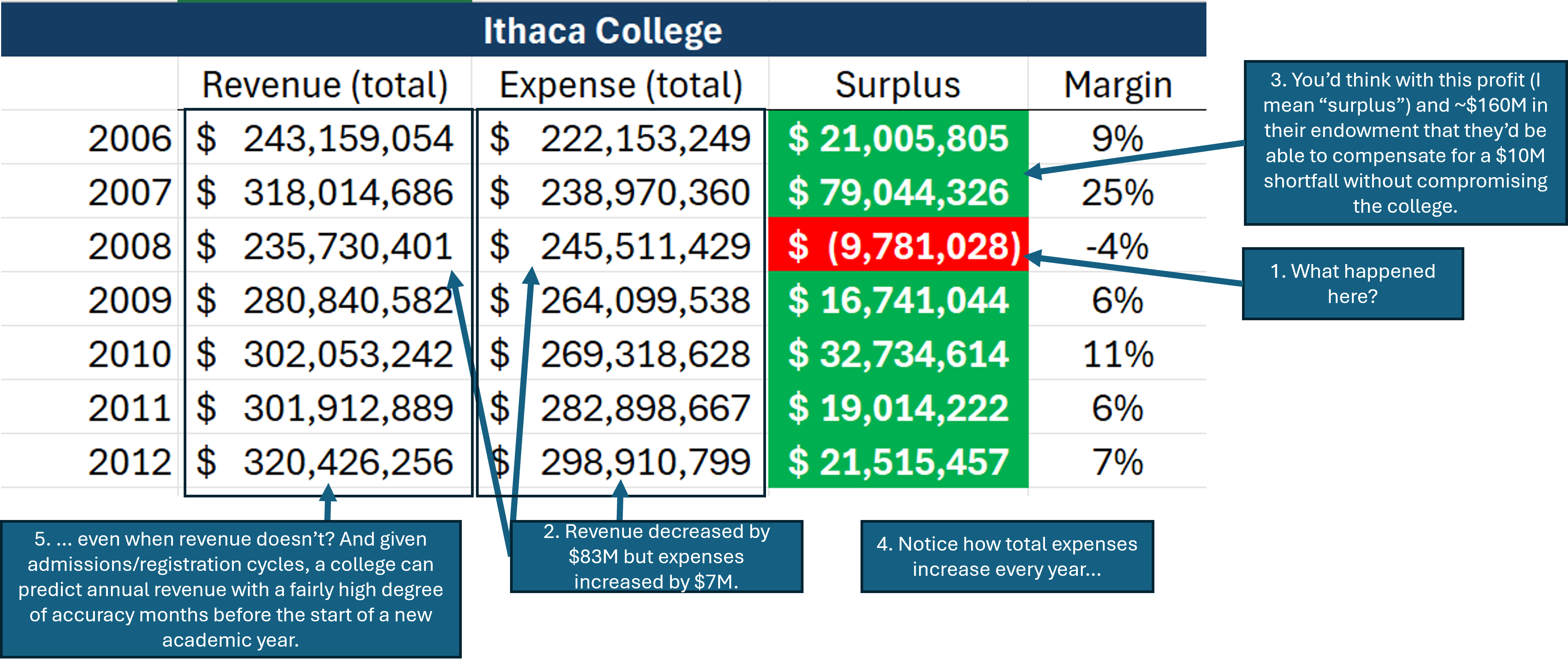
Most glaring here is the apparent disconnection between revenue and expenses.
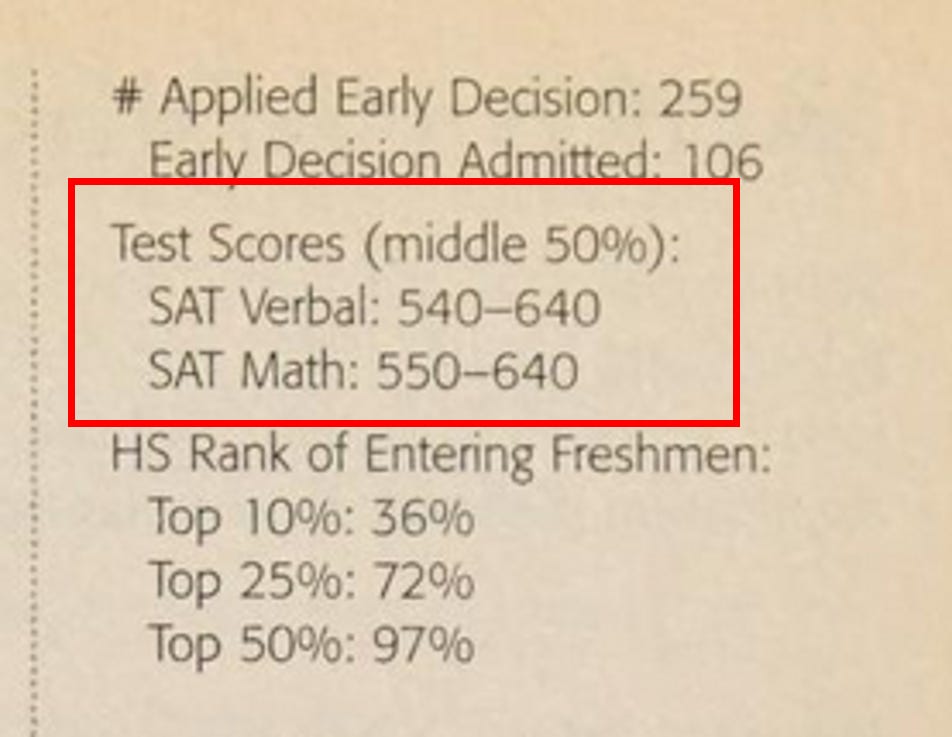
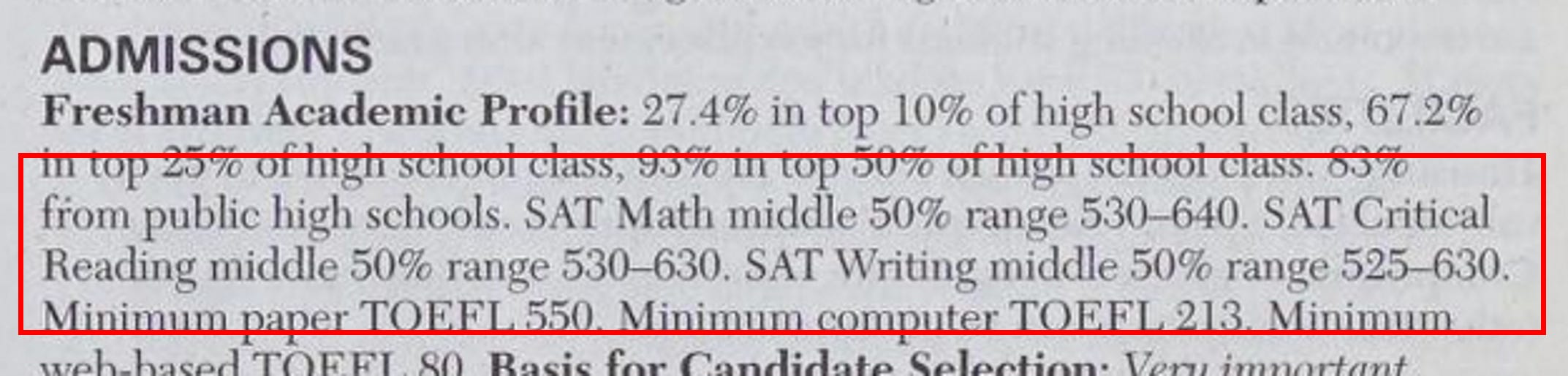
Now, for some pre- and post-2008 test scores.
2004
2011
2012
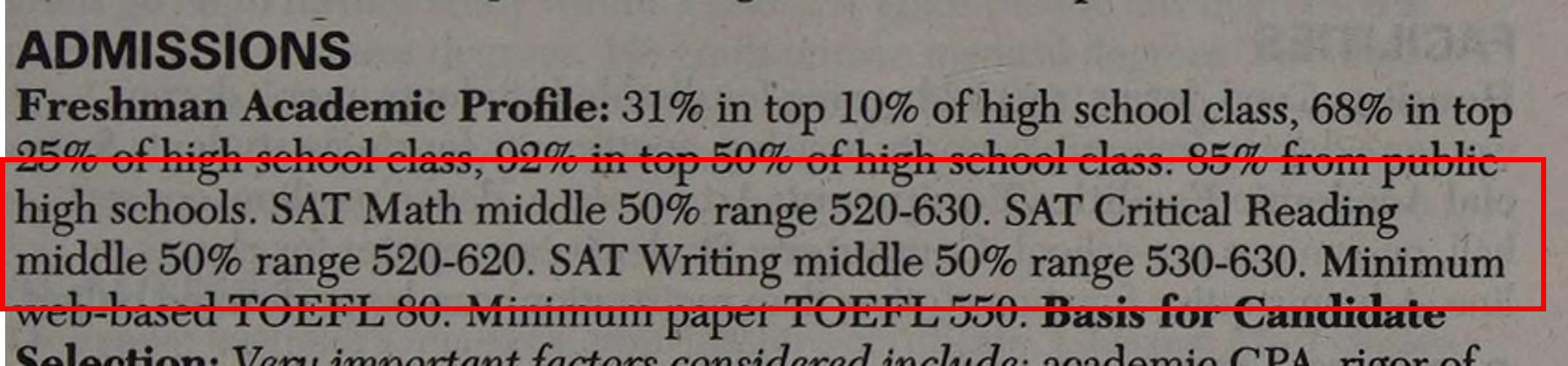
We see those numbers slide after 2008. For example, the 25% percentile in SAT Math declined from 550 to 520.
Here are Ithaca’s SAT scores today:

Wow. That 25% in math percentile increased from 520 in 2012 to 600 today. It’s almost as if all the low test scores magically disappeared.
Because they did.
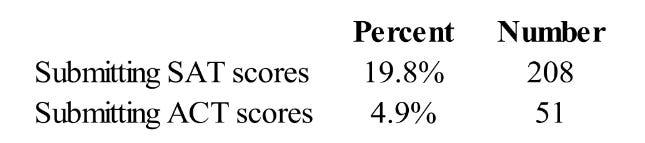
Those 2012 SAT scores are from 100% of the entering class. Those vastly improved 2024 scores are only from about 25% of the class at most.
Here’s a summary of Ithaca’s test-optional policy:
Ithaca College adopted a test-optional admissions policy in 2012, allowing undergraduate applicants to choose whether to submit SAT or ACT scores (or withhold them entirely) as part of a holistic review process that emphasizes individual talents, accomplishments, and potential beyond standardized testing. This policy was not prompted by the COVID-19 pandemic (though the college reaffirmed its commitment to it during that period); instead, it predates widespread adoption of such practices by over seven years. The policy remains in effect as of 2025, with scores considered if submitted but not required for admission or most scholarships.
So the process Ithaca employed:
1. Counter errors with more (preferably permanent) errors.
2. Always increase spending.
3. Cover up the errors with admissions shenanigans.
The primary lesson here is it’s very difficult to turn around a brand if you resort to down-selling. Don’t think you can just undo the damage.
Of course, the other lesson is that there are many ways to manipulate admissions data.
And no, I’m not going to write anything on Ithaca’s comically brutal marketing, but it’s the very definition of tone-deaf.
Can’t blame me! I enrolled at IC in 2007.